
Birds Georgia
  • Home
  • Ways to Give
    • Join/Renew
    • Donate
    • Giving Tuesday
    • Leadership Giving
    • Planned Giving
    • Sponsorship Opportunities
    • Shop in our Online Store
    • Support Birds Georgia When You Shop
  • Conservation
    • Wildlife Sanctuary Program >
      • Map of Birds Georgia Sanctuaries
      • Wildlife Sanctuary Requirements
      • Sanctuary Resources
    • Habitat Restoration >
      • Q&A Habitat Restoration
    • Habitat Stewardship Program
    • Private Lands Birding Trail
    • Building Collisions >
      • Project Safe Flight
      • Lights Out Georgia
      • Collision Resources
    • Species of Concern >
      • Chuck-will's-widow
      • Ruby-throated Hummingbird
      • Chimney Swift
      • Wood Thrush
      • Brown-headed Nuthatch
    • Climate Change
    • Plants for Birds
    • Coffee and Chocolate
  • Education
    • Learn
    • For Youth >
      • Georgia Urban Ecologists
      • Scouts
      • Homeschool
      • Youth Birding Competition
      • Camp Talon
    • For Educators >
      • School Programs
      • Learning About Birds Curriculum
      • Professional Development
      • Connecting Students with STEM Through Birds
      • Resources
    • Master Birder Program
    • Scholarships
  • Engagement
    • Field Trips
    • Volunteer >
      • Volunteer Code of Conduct
    • GA Birding Trail
    • Program Requests
    • Community Science
    • Beloved Naturalist
    • Conservation Career Resources
    • Birding Resources >
      • Birding Sites in Georgia
      • Accessibility
      • Georgia Birding Network
      • Why Birds?
  • News & Events
    • Press Room
    • Upcoming Events >
      • Program Participant Safety
    • Travel >
      • Puerto Rico: Island of Enchantment
      • Wheeler NWR 2026
      • St. Marks and the Florida Panhandle
      • Colombia 2026
      • South Dakota 2026
      • Brazil 2026
      • Pacific Northwest 2026
    • News Feed
    • Newsletters
    • Birds Georgia at Manuel's Tavern
    • Early Birds Book Club
  • About Us
    • Mission and Programs
    • Annual Report
    • Board and Staff
    • Injured/Orphaned Birds
    • Advocacy
    • Job Opportunities
    • Equity, Diversity, Inclusion
    • Best Management Practices
    • Contact or Visit Us

Advocacy

Birds Georgia is the leading voice for the birds across the state of Georgia. Birds Georgia watches vigilantly for harmful activities that could affect birds or undermine the integrity of bird habitat. Many birds found in Georgia are migratory and stop in Georgia only briefly before continuing their journey to other areas of the country and continents. Therefore, our work to inform decision makers about legislation and policies that benefit or threaten birds and their habitat involves local, state, national, and, occasionally, international concerns.

From clean air and water to support for the nation’s iconic national parks and national wildlife refuges to climate change and pesticide use, many of the same issues that touch people also touch birds. In addition, protections for birds conferred by such milestone legislation as the Neotropical Migratory Bird Conservation Act and the Endangered Species Act have long-term implications for people along with more immediate impact on birds.

Our Values

​The following are a list of values for which Birds Georgia advocates.  These values guide us in our programmatic work:

  • We believe that where birds thrive, people thrive.
  • We believe everyone in Georgia should have access to bird-friendly habitats, as the benefits of healthy bird populations and high bird diversity are exceptional, irreplaceable, and invaluable to all members of the community.
  • We believe in maximizing the number of native plants in any outdoor space.
  • We believe that maximizing structural diversity of a small habitat is the best strategy for encouraging use by a variety of Georgia's bird species.
  • We believe in maximizing the urban/suburban tree canopy.
  • We believe in minimizing sterile, monoculture outdoor spaces, including large swaths of turf grass, for the benefit of birds, insects, and other wildlife.
  • We believe in minimizing the number of exotic plants in any outdoor space.
  • We believe in managing invasive plant species to allow for a higher diversity of native plants.
  • We believe in eliminating the widespread use of chemical pesticides, herbicides, and rodenticides in the environment. We understand and support the limited, responsible use of targeted herbicides for habitat restoration and management in controlling exotic and invasive species.
  • Domestic and feral cats are not a part of the natural ecosystem. We believe that domestic cats should be kept indoors and that outdoor feral cat colonies should not be supported in any way.
  • We believe in taking action to reduce bird-building collisions and other hazards to birds in the built environment.
  • We believe that new development can be bird-safe and encourage the use of techniques that reduce loss of natural habitat and use of materials and design that minimizes bird collisions.
  • We believe in reducing the effects of climate change in order to reduce the negative shifts and potential collapse of local bird populations.

Donate to support our advocacy efforts

Issues with which we are currently involved

Okefenokee Swamp mining Proposal
Birds Georgia is an active member of the Okefenokee Protection Alliance (OPA). Learn more about this issue and our work with OPA on their website. 

The Okefenokee Protection Alliance, a coalition of more than 40 organizations, is leading the effort to protect the largest blackwater wetland in North America. At stake is an incomparable 440,000-acre ecosystem, two rivers and a wilderness destination that records as many as 700,000 annual visits.

Birds Georgiia opposes the Camden County Spaceport and encourages the the Georgia Environmental Protection Division to deny permits to Twin Pines for this project.  

BACKGROUND:
In July 2019, a proposal was submitted to the U.S. Army Corps of Engineers by an Alabama-based company, Twin Pines, seeking issuance of a permit to mine for heavy minerals (titanium and zirconium) from Trail Ridge near the southeastern edge of the Okefenokee Swamp. After public outcry, this plan was withdrawn. 

In March 2020, Twin Pines, LLC, an Alabama-based mining company, submitted a revised application to the U.S. Army Corps of Engineers (USACE) seeking issuance of a permit to “construct a demonstration mining project on 1,042 acres that will mine heavy mineral sands on 898 acres over 6 years” from Trail Ridge near the southeastern edge of the Okefenokee Swamp.

The mining is proposed to go an average of 50 feet deep from the ground surface which is below the level of the Okefenokee Swamp depression, which is integral to maintaining surface water and groundwater hydrology in this region of southeast Georgia. Twin Pines plans for a facility on a 12,000 acre tract along Trail Ridge and very close to the Okefenokee National Wildlife Refuge in Charlton County.

The proposed mine in the revised application is smaller, but still represents a similar, if not identical, threat, in that the company still intends to mine all of the economically-viable deposits on the entire 12,000-acre tract.

The Okefenokee is the largest blackwater swamp in North America, comprised of about 440,000 acres, and is considered one of the world’s largest intact freshwater ecosystems. The swamp, designated a National Wildlife Refuge in 1937, is located in Southeast Georgia and visited by 600,000 people annually. The Okefenokee swamp is a unique wetland system made up of peet beds, island prairies, open lakes, creek channels, and cypress forests. It creates an ideal home for wildlife. Wading birds, songbirds, toads, turtles, frogs, and black bears all make their home in Okefenokee, but the most abundant and visible resident are the healthy population of American alligators.

The mining proposals proximity to the Okefenokee Wildlife Refuge, which is one of Georgia’s most precious ecological sites, heightens concerns over the proposed mining.  The mining would impact wetlands on or adjacent to this tract and could permanently impact the hydrology of the entire Okefenokee Swamp. The Okefenokee’s 438,000-acre biodiverse ecosystem is home to the headwaters of two notable rivers, the Suwannee and the St. Marys.

Each year, 600,000 people visit the Okefenokee National Wildlife Refuge, generating roughly $88 million in economic impact in Charlton, Clinch and Ware Counties.
​
Risking the health of the Okefenokee, its ecosystem, and its current economic impact is unthinkable today as it was in the late 1990s. Then, the swift action of concerned citizens, scientists, lawmakers and conservation groups fought off a similar mining threat.
Migratory Bird Treaty Act
The Migratory Bird Treaty Act is America’s most important bird protection law. Passed in 1918 with the support of Audubon advocates and other early conservationists, the Migratory Bird Treaty Act (MBTA) protects nearly all of our country’s native birds. The law carries out the 1916 Migratory Bird Treaty with Canada, and later treaties signed with Mexico, Japan, and Russia, in order to protect our nation’s shared bird species. The MBTA is credited with saving numerous species from extinction, such as the Snowy Egret, Wood Duck, and Sandhill Crane, and millions, if not billions of other birds.

The penalties under the bird protection law have served as critical incentives for companies to take common sense precautions to help reduce bird kills, such as covering oil pits with nets and marking transmission lines so they are more visible to migrating birds. Every Republican and Democratic administration since the 1970s has applied the law to avoidable industrial hazards, which has saved countless numbers of birds.  The Trump administration eliminated this longtime protection at the end of his term, essentially creating a free pass to kill birds.

The change by the Trump administration limits the MBTA’s protection only to activities that purposefully kill birds, exempting all industrial hazards from enforcement. Any “incidental” death—no matter how inevitable, avoidable or devastating to birds—became immune from enforcement under the law. If this change had been in place in 2010, BP would have faced no consequences under the MBTA for the more than one million birds killed in the Deepwater Horizon oil spill. BP ended up paying $100 million in fines thanks specifically to provisions in the MBTA.
In response to overwhelming opposition to this move, the current administration has started a regulatory process to repeal this change, but reinstating the Migratory Bird Treaty Act should only be the beginning.
​
Visit the National Audubon Society website for additional updates on Congressional efforts to update the Migratory Bird Treaty Act. ​

Georgia Audubon Opposes Changes to the Migratory Bird Treaty Act and encourages a new rulemaking process to establish a permitting program under MBTA to strengthen it from future attacks and offer stability and certainty for birds and businesses.

OIl and Gas exploration off georgia coast
Birds Georgia joined National Audubon Society, 100 Miles Georgia, Sierra Club, the Georgia Conservancy, Environment Georgia, Center for a Sustainable Coast, 141 cities and counties including Georgia communities Savannah, Brunswick, Hinesville, St. Mary’s, Kingsland, Porterdale, and Tybee Island, and a long list of other conservation organizations and coastal communities in opposing a proposal by the Trump Administration to vastly expand oil drilling off of America’s beaches and coasts, including Georgia’s 100-mile coastline. 

The proposed plan included parts of the outer continental shelf (OCS) along the Arctic, Atlantic, and Pacific coasts. Atlantic seabirds and shorebirds that would be especially at-risk from offshore oil and gas development include Red Knots, Piping Plovers, American Oystercatchers, Greater Shearwaters, Sooty Shearwaters, and Roseate Terns.
 
National Audubon Society and other organizations encouraged the Administration to limit offshore drilling to locations where leases are already active. Expanding lease sales to sensitive marine areas off the Arctic, Atlantic and Pacific coasts threatens critical bird habitat as well as the economic viability of hundreds of coastal communities. 

​Georgia Audubon opposes drilling off the Georgia Coast.

Parks as Habitat
Birds Georgia mission is to build places where birds and people thrive. To this end, we support efforts to create and build parks that provide greenspace for people and native plants for birds and other wildlife.

Birds Georgia serves on Atlanta Mayor Andre Dickinson's Parks and Greenspace Council to represent the interest of birds in the creation and maintenance of Atlanta's Park System. 

Horseshoe Crab Recovery Coalition
Birds Georgia serves on the Horseshoe Crab Recover Coalition, a group dedicated to ensuring the future of the American Horseshoe Crab. Horseshoe crabs and the species that depend on them are in a fight for survival. Years of overharvest for bait and biomedical bleeding are twin threats facing this ancient species. The bait harvest needs reform and bleeding should be phased out in favor of synthetic alternatives that are already in use. We are a science based coalition that aims to stem years of decline of horseshoe crabs and restore them to their former abundance by 2030.

What do horseshoe crabs have to do with birds? 

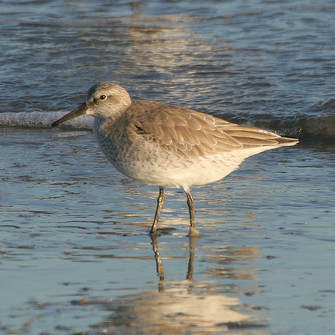
Horseshoe crabs are a keystone species. Each spring, horseshoe crabs travel from deep Atlantic waters to the shore for breeding season. Beaches are swarmed with female crabs laying tens of thousands of eggs. These eggs are a calorie dense source of food for migrating shorebirds, including the Rufa Red Knot, foraging fishes, and sea turtles. These eggs are so important, that Red Knots time their migratory journeys to take advantage of these horseshoe crab eggs along the Georgia coast. The fatty, nutrient-dense eggs provide Red Knots with vital energy to replace fuel reserves before they continue their migratory journey to the Canadian Arctic. 
Past and Ongoing Conservation Issues
PictureRed Knot by Dan Vickers
Birds Georgia has spoken out on the following conservation issues:​
  • Camden County Spaceport
  • Wetlands and Clean Water
  • Neotropical Migratory Birds Conservation Act
  • Endangered Species Act
  • Conservation of Albatrosses and Petrels
  • Transmission Lines/Wind Power
  • Arctic National Wildlife Refuge
  • Neonicotinoids in plants that affect birds and other pollinators
  • Marsh Development Setback rules on Georgia coast


Support on Local Issues

While there are many worthy causes that warrant attention, due to limited resources Birds Georgia has a decision-making rubric we employ to determine conservation issues on which we will speak out. Generally, we will only offer support on issues that will have broad impacts on Georgia birds and their habitats. We do not get involved with local property issues. If you have an issue that you would like to bring to our attention, please email Dottie Head, Director of Communications. 
 
If you’re looking for additional support, here are some resources that might be helpful:
  • EarthShare of Georgia
  • Environment Georgia
  • Georgia Native Plant Society
  • Georgia Wildlife Federation
  • The Nature Conservancy
  • Trees Atlanta
  • Trust for Public Land
  • Park Pride
  • Georgia Conservancy
  • Chattahoochee RiverKeeper
  • Georgia Department of Natural Resources
  • Southface
  • Your municipal or county Natural Resources Department
Picture
825 Warner St. SW
Suite B
Atlanta, GA 30310​678-973-2437
Birds Georgia is a member-supported, 501c3 nonprofit organization building places where birds and people thrive. We create bird-friendly communities through conservation, education, and community engagement.
About Us | Donate | Join | Login to my account | ​Shop
Log in to Morgens Environmental Education Gateway
Picture
Ask Chippy Your Bird Related Questions
  • Home
  • Ways to Give
    • Join/Renew
    • Donate
    • Giving Tuesday
    • Leadership Giving
    • Planned Giving
    • Sponsorship Opportunities
    • Shop in our Online Store
    • Support Birds Georgia When You Shop
  • Conservation
    • Wildlife Sanctuary Program >
      • Map of Birds Georgia Sanctuaries
      • Wildlife Sanctuary Requirements
      • Sanctuary Resources
    • Habitat Restoration >
      • Q&A Habitat Restoration
    • Habitat Stewardship Program
    • Private Lands Birding Trail
    • Building Collisions >
      • Project Safe Flight
      • Lights Out Georgia
      • Collision Resources
    • Species of Concern >
      • Chuck-will's-widow
      • Ruby-throated Hummingbird
      • Chimney Swift
      • Wood Thrush
      • Brown-headed Nuthatch
    • Climate Change
    • Plants for Birds
    • Coffee and Chocolate
  • Education
    • Learn
    • For Youth >
      • Georgia Urban Ecologists
      • Scouts
      • Homeschool
      • Youth Birding Competition
      • Camp Talon
    • For Educators >
      • School Programs
      • Learning About Birds Curriculum
      • Professional Development
      • Connecting Students with STEM Through Birds
      • Resources
    • Master Birder Program
    • Scholarships
  • Engagement
    • Field Trips
    • Volunteer >
      • Volunteer Code of Conduct
    • GA Birding Trail
    • Program Requests
    • Community Science
    • Beloved Naturalist
    • Conservation Career Resources
    • Birding Resources >
      • Birding Sites in Georgia
      • Accessibility
      • Georgia Birding Network
      • Why Birds?
  • News & Events
    • Press Room
    • Upcoming Events >
      • Program Participant Safety
    • Travel >
      • Puerto Rico: Island of Enchantment
      • Wheeler NWR 2026
      • St. Marks and the Florida Panhandle
      • Colombia 2026
      • South Dakota 2026
      • Brazil 2026
      • Pacific Northwest 2026
    • News Feed
    • Newsletters
    • Birds Georgia at Manuel's Tavern
    • Early Birds Book Club
  • About Us
    • Mission and Programs
    • Annual Report
    • Board and Staff
    • Injured/Orphaned Birds
    • Advocacy
    • Job Opportunities
    • Equity, Diversity, Inclusion
    • Best Management Practices
    • Contact or Visit Us