Birds Georgia
  • Home
  • Our Programs
    • Conservation >
      • Wildlife Sanctuary Program
      • Habitat Restoration >
        • Q&A Habitat Restoration
      • Habitat Stewardship Program
      • Private Lands Birding Trail
      • Building Collisions >
        • Project Safe Flight
        • Lights Out Georgia
    • Education >
      • Learn
      • For Educators >
        • School Programs
        • Learning About Birds Curriculum
        • Professional Development
        • Connecting Students with STEM Through Birds
      • For Youth >
        • Georgia Urban Ecologists
        • Scouts
        • Homeschool
        • Youth Birding Competition
        • Camp Talon
      • Master Birder Program
      • Beloved Naturalist
    • GA Birding Trail
    • Bird City Georgia
    • Program Requests
  • Ways to Give
    • Become a Member
    • Donate
    • Leadership Giving
    • Planned Giving
    • Sponsorship Opportunities
    • Shop our Online Store
  • Get Involved
    • Membership >
      • Member Login
    • Volunteer
    • Community Science
  • Events & Travel
    • Field Trips
    • Upcoming Events
    • Birds Georgia at Manuel's Tavern
    • Early Birds Book Club
    • Travel >
      • St. Marks and the Florida Panhandle
      • South Dakota 2026
      • Brazil 2026
      • Pacific Northwest 2026
  • About Us
    • Centennial Celebration
    • News and Stories >
      • Press Room
      • Newsletters
      • News Feed
    • Our Mission
    • Board and Staff
    • Job Opportunities
    • Contact or Visit Us
  • Resources
    • Birding Resources >
      • Birding Sites in Georgia
      • Accessibility
      • Georgia Birding Network
      • Why Birds?
    • Habitat Resources >
      • Best Management Practices
      • Sanctuary Resources
      • Plants for Birds
    • Injured/Orphaned Birds
    • Resources for Educators
    • Conservation Career Resources
    • Threats to Birds >
      • Climate Change
      • Collision Resources
      • Coffee and Chocolate
      • Species of Concern >
        • Chuck-will's-widow
        • Ruby-throated Hummingbird
        • Chimney Swift
        • Wood Thrush
        • Brown-headed Nuthatch

​Fall V. Spring Migration Stopover Density in Georgia

3/14/2024

0 Comments

 
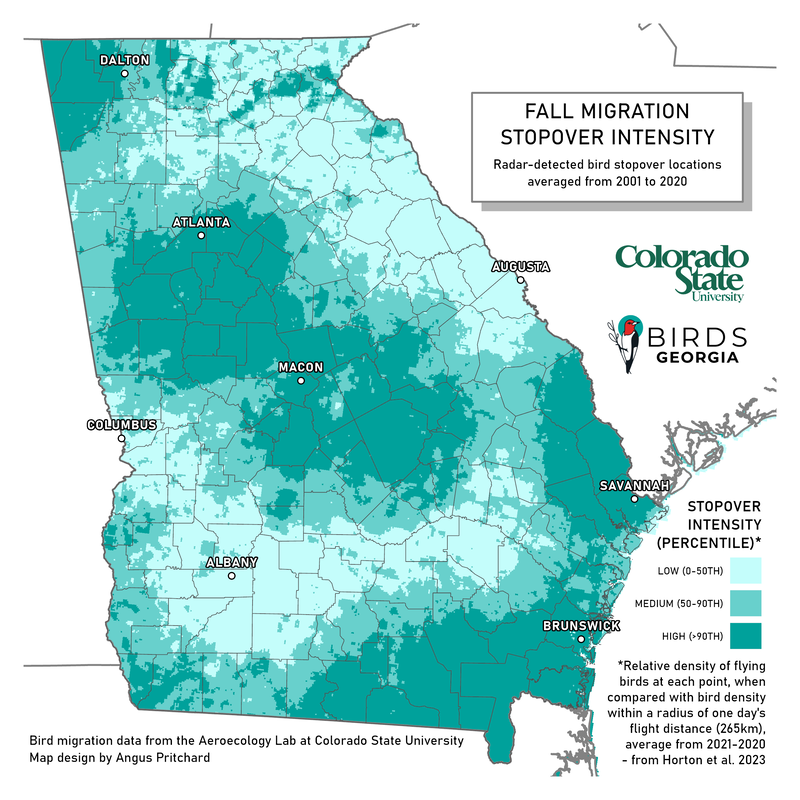
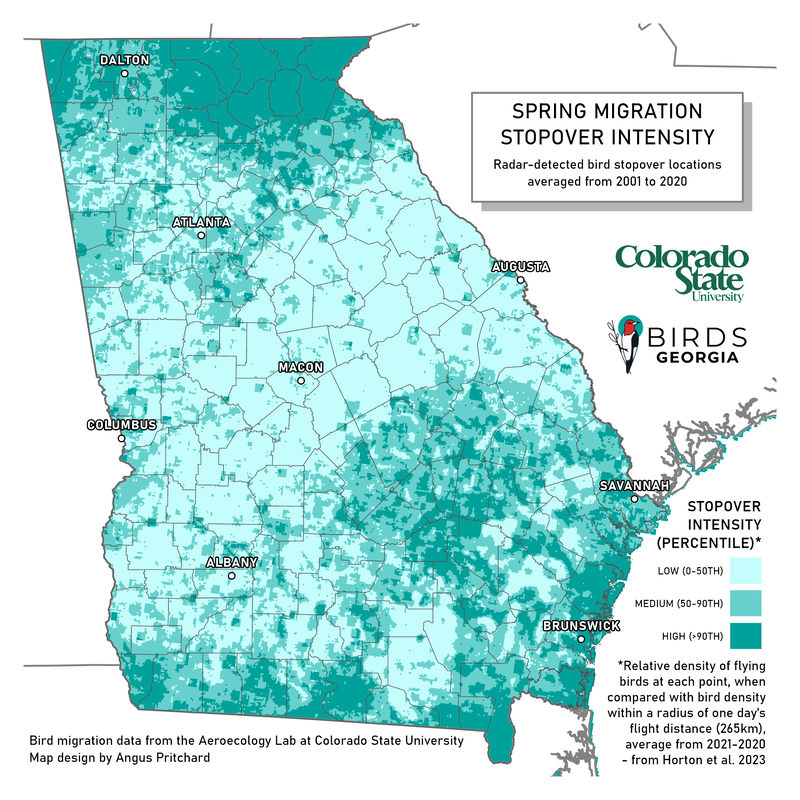
​Thanks to a generous grant from the Disney Conservation Fund, Birds Georgia has been working with Dr. Kyle Horton at Colorado State University (CSU) to measure migratory bird activity over the state during spring and fall migration. These maps were the result of that work.

Each fall and spring, billions of migratory birds travel across North America making their way between breeding grounds and wintering grounds. These birds must constantly confront changes to the landscapes below caused by natural and man-made forces, including the rapid proliferation of brightly lit nighttime landscapes. 

While migration takes part in the skies, birds must stop along the way to rest and refuel. Birds Georgia wants to know WHERE these birds are stopping and to gain a better understanding of WHY they choose these locations. 

By pairing migration intensity measurements from nearby weather stations with other environmental variables, the CSU team was able to train a machine learning model that predicted migration intensity in Georgia during spring and fall from 2000 to 2020. With these predictions, they were able to establish regions considered hotspots of bird migration stopover and refueling. The darker areas on the maps represent higher concentrations of birds stopping over to rest and feed.

In over 70% of the models that were created, skyglow (or night time lighting) was identified as a highly influential and consistently positive predictor of bird migration stopover density across Georgia and the United States.

The findings of this study point to the ever-expanding threat that brightly lit night skies pose to birds, particularly during migration. In short, migratory birds are extremely sensitive to nighttime lighting which acts like a magnet pulling them into brightly lit areas and cities where they face threats ranging from building collisions to predation. 

In recent years,  the Colorado State Team has been working with state organizations, like Birds Georgia, to provide state-level migration forecasts enabling us to issue Lights Out alerts on nights of peak migratory bird activity.

Learn more about this project or view the nightly forecast for Georgia enabled by this technology on our website. 
0 Comments

Your comment will be posted after it is approved.


Leave a Reply.

    Author

    Birds Georgia is building places where birds and people thrive.

    Archives

    January 2026
    December 2025
    November 2025
    October 2025
    September 2025
    August 2025
    July 2025
    April 2025
    February 2025
    January 2025
    December 2024
    November 2024
    September 2024
    August 2024
    July 2024
    June 2024
    May 2024
    April 2024
    March 2024
    February 2024
    January 2024
    December 2023
    November 2023
    October 2023
    September 2023
    August 2023
    June 2023
    May 2023
    April 2023
    March 2023
    February 2023
    January 2023
    December 2022
    November 2022
    October 2022
    September 2022
    August 2022
    July 2022
    June 2022
    May 2022
    April 2022
    March 2022
    February 2022
    December 2021
    November 2021
    October 2021
    September 2021
    August 2021
    July 2021
    June 2021
    May 2021
    April 2021
    February 2021
    December 2020
    November 2020
    October 2020
    September 2020
    August 2020

    Categories

    All

    RSS Feed

Picture
825 Warner St. SW
Suite B
Atlanta, GA 30310​678-973-2437
Birds Georgia is a member-supported, 501c3 nonprofit organization building places where birds and people thrive. We create bird-friendly communities through conservation, education, and community engagement.
About Us | Donate | Join | Login to my account | ​Shop
Log in to Morgens Environmental Education Gateway
Picture
Ask Chippy Your Bird Related Questions
  • Home
  • Our Programs
    • Conservation >
      • Wildlife Sanctuary Program
      • Habitat Restoration >
        • Q&A Habitat Restoration
      • Habitat Stewardship Program
      • Private Lands Birding Trail
      • Building Collisions >
        • Project Safe Flight
        • Lights Out Georgia
    • Education >
      • Learn
      • For Educators >
        • School Programs
        • Learning About Birds Curriculum
        • Professional Development
        • Connecting Students with STEM Through Birds
      • For Youth >
        • Georgia Urban Ecologists
        • Scouts
        • Homeschool
        • Youth Birding Competition
        • Camp Talon
      • Master Birder Program
      • Beloved Naturalist
    • GA Birding Trail
    • Bird City Georgia
    • Program Requests
  • Ways to Give
    • Become a Member
    • Donate
    • Leadership Giving
    • Planned Giving
    • Sponsorship Opportunities
    • Shop our Online Store
  • Get Involved
    • Membership >
      • Member Login
    • Volunteer
    • Community Science
  • Events & Travel
    • Field Trips
    • Upcoming Events
    • Birds Georgia at Manuel's Tavern
    • Early Birds Book Club
    • Travel >
      • St. Marks and the Florida Panhandle
      • South Dakota 2026
      • Brazil 2026
      • Pacific Northwest 2026
  • About Us
    • Centennial Celebration
    • News and Stories >
      • Press Room
      • Newsletters
      • News Feed
    • Our Mission
    • Board and Staff
    • Job Opportunities
    • Contact or Visit Us
  • Resources
    • Birding Resources >
      • Birding Sites in Georgia
      • Accessibility
      • Georgia Birding Network
      • Why Birds?
    • Habitat Resources >
      • Best Management Practices
      • Sanctuary Resources
      • Plants for Birds
    • Injured/Orphaned Birds
    • Resources for Educators
    • Conservation Career Resources
    • Threats to Birds >
      • Climate Change
      • Collision Resources
      • Coffee and Chocolate
      • Species of Concern >
        • Chuck-will's-widow
        • Ruby-throated Hummingbird
        • Chimney Swift
        • Wood Thrush
        • Brown-headed Nuthatch